
Help centre
Frequently asked questions.
Straight answers from fifty years on the counter. Search below, filter by category, or jump to a topic — and if it's not here, our technical team is a phone call away.
Category
Bearings
How do I find the right replacement bearing from an old part number?
Check the part number stamped on the bearing's outer ring or shield — this usually follows a standard format (e.g. 6205-2RS). If the marking is worn, measure the bore diameter, outer diameter and width, then use our cross-reference tool or send the dimensions to our technical team and we'll identify it.
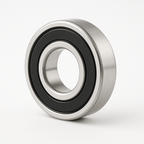
What's the difference between sealed (2RS) and shielded (ZZ) bearings?
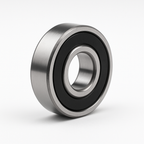
Sealed bearings (2RS / RS) have rubber contact seals that keep out dust, moisture and contaminants — better for washdown or dirty environments. Shielded bearings (ZZ) use non-contact metal shields, allowing lower friction and higher speeds, but offer less protection against ingress.
How do I know the load rating I need?
Load rating depends on the application: radial load, axial (thrust) load, speed and expected service life. The dynamic load rating (Cr) applies to rotating applications; the static load rating (Cor) applies to stationary or slow-moving loads. If you're unsure, share your application details — RPM, load direction and duty cycle — and we'll size it for you.
Are your bearings compatible with SKF, FAG or NSK part numbers?
Yes — most standard metric bearings (deep-groove ball bearings, etc.) are dimensionally interchangeable across major manufacturers when the ISO part number matches (a 6205 is a 6205 regardless of brand). Precision class and material spec can still vary, so check the datasheet if tolerance is critical.
What tolerance class are your bearings?
Most of our stocked bearings are supplied to ISO Normal (P0) tolerance — the standard class for general industrial use. Tighter precision classes (P6, P5 and above) are available to order; tell us your application and we'll confirm what's achievable.
Do you offer stainless steel or corrosion-resistant bearings?
Yes — stainless and corrosion-resistant options are available across several lines, suited to food, marine and washdown environments. Let our team know your conditions and we'll recommend the right grade.
What's your lead time on stocked vs special-order bearings?
Stocked lines dispatch the same working day when ordered before 3pm. Special-order and non-standard items vary by manufacturer — we'll confirm a firm lead time as soon as you enquire.
Do you provide material certificates or traceability documentation?
Yes — material certificates and traceability documentation can be supplied for regulated industries such as aerospace, food and pharmaceutical. Please request this at the time of ordering.
Category
Belts
How do I measure belt length and profile (V-belt, timing belt, etc.)?
Measure the belt's top width and depth to identify the section (e.g. Z, A, B, SPA, SPB), then measure the inside or datum length. For timing belts, note the tooth pitch and count the teeth. Send us the figures — or the markings from the old belt — and we'll match it.
Can belts be cut to custom length?
Certain belt and drive types can be supplied cut-to-length or as jointed sets. Please note that cut-to-length items generally cannot be returned once cut — see Returns & warranty below.
What temperature and chemical resistance do your belts offer?
It depends on the belt's construction and compound. Standard rubber V-belts handle typical industrial ranges; specialist compounds are available for high-temperature, oily or chemically aggressive environments. Tell us the operating conditions and we'll specify accordingly.
Category
Seals
Which seal material should I choose — NBR, Viton (FKM) or PTFE?
Match the material to your fluid and temperature: NBR (nitrile) for general oils and moderate temperatures, Viton/FKM for high temperatures and aggressive chemicals, and PTFE for extreme chemical resistance or dry running. Share the medium and operating temperature and we'll recommend the right compound.
How do I get the shaft size and housing bore right?
A seal is defined by three figures — shaft diameter, housing bore and width (e.g. 25 × 47 × 7). Measure the shaft it runs on and the bore it seats in, and check the tolerances against the housing. We can also cross-reference from the old seal's markings.
Static vs dynamic sealing — which do I need?
Static seals sit between two fixed faces; dynamic seals run against a moving (usually rotating) shaft. The application determines the lip design, material and whether a spring-energised lip is needed — let us know the arrangement and we'll point you to the right type.
General
Ordering & account
Do you have minimum order quantities?
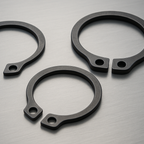
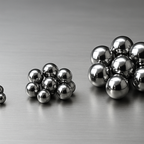
Most lines can be bought individually. Some small components — steel balls, circlips and similar — are sold in packs, and the pack quantity is shown on each product page. There's no minimum order value for online orders.
Do you offer trade accounts and trade pricing?
Yes — trade accounts come with account pricing, 30-day terms and a dedicated point of contact. Apply through our contact page or speak to our accounts team directly.
Are prices shown with or without VAT?
Every product shows both the ex-VAT and inc-VAT price, so business and consumer buyers can see the figure that matters to them. VAT is itemised in full at checkout.
General
Shipping & delivery
How fast is UK delivery?
Order before 3pm Monday–Friday for next-working-day delivery across mainland UK. UK delivery is free on orders over £75.
Do you ship to the EU and internationally?
Yes — international shipping is available. Delivery times and any duties vary by destination; contact us for a quote on international or larger consignments.
How are precision parts packaged?
Precision components are individually protected and packed to prevent contamination and damage in transit — particularly important for bearings, seals and ground shafts.
Can I collect my order?
Yes. You can collect from our trade counter at Sterling House, 2 Law Street, Leicester LE4 5GR. Call ahead and we'll have it ready for you.
General
Returns & warranty
What's your returns policy?
Unused stock items in their original packaging can be returned — contact us to arrange it. Please note that cut-to-length items such as belts and chain cannot be returned once cut.
What warranty applies to bearings and drive components?
Bearings, pumps and drive components are covered against manufacturing defects. Exact warranty terms vary by product and manufacturer — we'll confirm the applicable terms on request.
General
Technical & compliance
Can I talk to an engineer or technical team?
Yes — our technical team has decades of counter experience. Send your application details, an old part number, or a full parts list, and we'll match and advise — usually within one working hour.
Do you provide datasheets or CAD drawings?
Datasheets are available for our stocked lines, and CAD/drawings can be requested for many components. Ask our team about a specific part and we'll send what we have.
What certifications and compliance do you hold?
We operate to recognised quality standards including ISO 9001, and can supply CE marking information and material / mill certificates where required for engineering due diligence. Request documentation at the time of ordering.
What payment methods and terms do you offer?
We accept all major cards and, for trade-account customers, purchase orders on 30-day terms. Credit accounts are available on application.
No matches.
Try a different word — or just ask us directly.
Didn't find it?
Talk to a bearings expert.
Fifty years on the counter. Send us a part number, a drawing or a whole parts list — we'll come back within one working hour.